Elevating knowledge: read our in-depth features

'GIM International' spoke to Blickfeld, a developer of Lidar sensors and software, to hear about other potentially relevant applications in smart cities, besides for autonomous driving. Despite the n...

Read this interview with Topcon's Ulrich Hermanski for his views on the current status of the surveying profession, the key advances and the future role of surveyors. Since graduating in Geomatics Eng...
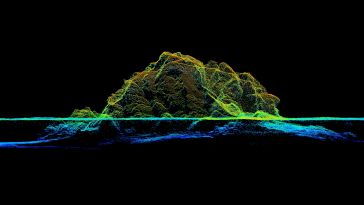
RIEGL tested the performance of its topobathymetric airborne laser scanning system in a transition zone context along the French Mediterranean coast. Initially planned as a UAV survey, tests were cond...
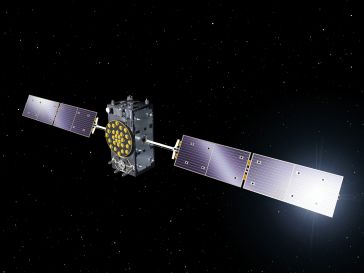
GNSS… it’s almost impossible to run a modern geo-related business without it. But what if a problem should occur? Whether in navigation, surveying or even agriculture, countless activities almost ...
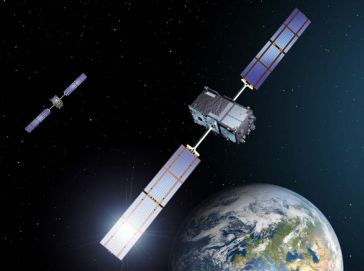
With spoofing attacks on the rise, survey-grade GNSS receivers need to be protected by interference mitigation technology utilizing the latest security techniques to ensure reliable positioning. The s...
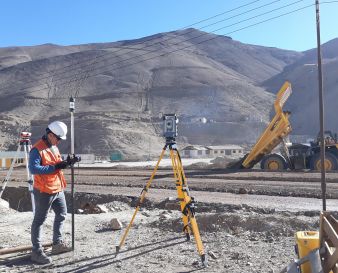
Do you need new acquisition equipment, but you're struggling to assess the alternatives? Mathias Lemmens provides some pointers to support your decision-making. When the need arises for new acquisiti...

OxTS has announced the opening of a new office in Germany. This move comes as part of the company's plan to expand its services and improve the quality of support it provides to its customers in Europ...
ComNav Technology has introduced a new product called Venus Laser RTK, which allows positioning without the need for a range pole. For the prism-free total station, the principle behind this technolog...
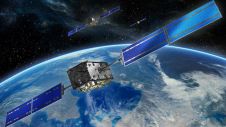
Galileo has begun the delivery of its High Accuracy Service (HAS), as officially announced by Thierry Breton, European Commissioner for the Internal Market. He described HAS as “feeding a prosperou...

ComNav Technology has launched a laser GNSS receiver which enables rodless surveys – the Venus Laser RTK – as part of its new Universe series of GNSS receivers. Surveyors in the field are often r...
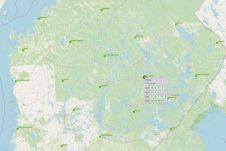
The National Emergency Supply Agency and the National Land Survey of Finland have joined forces to ensure the security of satellite positioning services in the country. A project has been launched ...

Scientists in the Netherlands have developed an alternative navigation system with 10cm accuracy. The system, which was implemented in a specially developed mobile network, offers a glimpse of a futur...
Our weekly newsletter is an easy way to stay updated with our latest articles, news, and magazines. It's the easiest way to stay current with the industry.
Subscribe to our newsletter(s)Positioning, in its essence, represents the meticulous process of accurately determining the spatial location of an object concerning a specific framework or datum. This fundamental concept of positioning plays an indispensable role in the domains of geography and hydrography, persistently guiding the quest to pinpoint the precise locations of the objects and features we seek to measure and understand.
Depending on the specific application at hand, the framework within which positioning occurs can be either of a global or local nature. When thinking on a global scale, the utilization of advanced techniques like Global Navigation Satellite Systems (GNSS) comes into play. In this scenario, the framework for positioning is meticulously defined by geodetic coordinate reference systems, ensuring the utmost accuracy in spatial determinations on a planetary scale.
Conversely, in more localized settings, positioning takes on a distinct character, tailored to the unique demands of specific tasks. For instance, in the realms of construction and engineering, the precision of positioning is paramount, and it's achieved through instruments such as the Total Station, allowing for the highly accurate alignment and placement of structures and infrastructure. Meanwhile, indoor navigation is another intriguing facet of local positioning, where the frameworks are often established within the confines of buildings, where technologies like indoor positioning systems enable precise and efficient navigation.
As we delve deeper into the world of positioning, it becomes evident that this art and science of location determination extends its influence far and wide, offering versatile solutions for diverse applications, all while maintaining an unwavering commitment to spatial accuracy.
This site uses cookies. By continuing to use this website, you agree to our Cookies Policy. Agree